
In the heart of Ranu Darungan, within Bromo Tengger Semeru National Park, lies a hidden world of tiny workers. Flora Fauna Nusantara (FFN) highlights the crucial role of ant communities as bioindicators of forest health and ecosystem resilience following natural environmental shifts.
Beneath the lush canopy of Ranu Darungan in Bromo Tengger Semeru National Park, a small but tireless community works around the clock to maintain nature’s balance: Ants. Despite their size, their presence is a monumental pillar of the forest ecosystem.
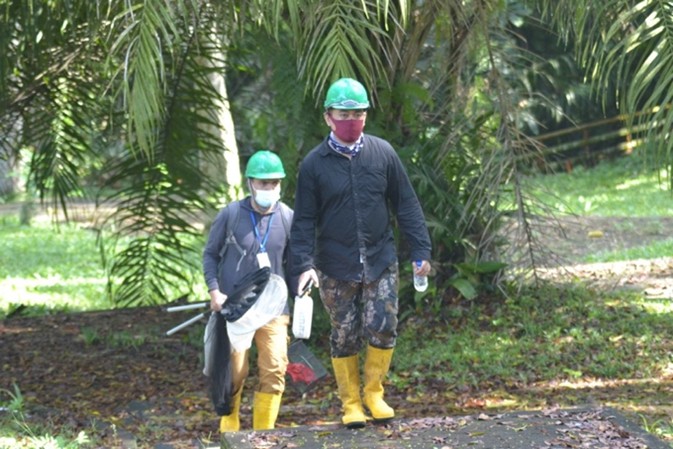
A Biodiversity Hub Our recent observation in the Ranu Darungan area revealed a diverse range of ant subfamilies inhabiting the forest floor, leaf litter, tree trunks, and moist areas near water streams. Some of the key species identified include:
- Diacamma sp.
- Odontoponera sp. 1
- Leptogenys sp.
- Odontoponera sp. 2
- Myrmicaria brunnea
- Myrmicaria sp.
- Pheidole harrisonfordi
- Strumigenys gundlachi
- Lepisiota sp.
- Oecophylla sp.
- Camponotus sp.
- Polyrhachis sp.
- Euprenolepis sp.
- Anoplolepis sp.
- Dolichoderus sp.

Bioindicators of Ecosystem Recovery What makes this finding remarkable is the resilience of these species. Despite the environmental impacts of Mount Semeru’s eruptions, the ant population in Ranu Darungan remains stable. This proves that ants serve as excellent natural bioindicators, reflecting the forest’s ability to recover and sustain life after environmental disturbances.
The Role of the Smallest Guardians Ants are among the most successful insect groups on Earth. In the forest, they function as:
- Predators & Decomposers: Controlling pest populations and recycling nutrients.
- Soil Engineers: Aerating the soil through their tunnels.
- Seed Dispersers: Helping the next generation of forest trees to grow.
At Flora Fauna Nusantara (FFN), we believe that the smallest creatures are often the foundation of the most vital ecosystems. By understanding and protecting these “tiny architects,” we are securing the future of our forests.